Pineapple Scribble Stitch Review
A Playful, Hand-Drawn Vibe That Stands Out
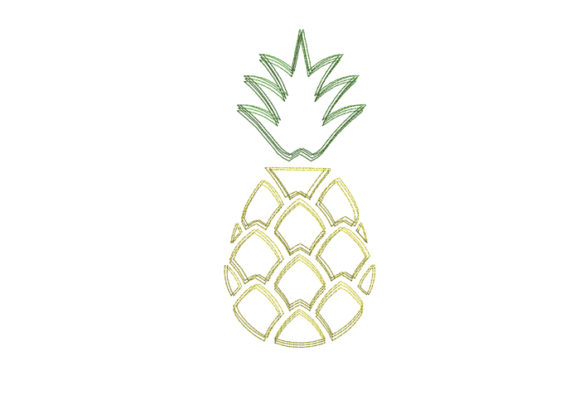
As an embroidery designer who’s stitched everything from delicate monograms to dense logo patches, my first impression of Pineapple Scribble Stitch was immediate: this isn’t just another food-themed motif—it’s a personality-packed machine embroidery design with real charm. The scribble aesthetic gives it movement and spontaneity, like a confident sketch brought to life in thread. It leans into the Food category without feeling literal or cartoonish—there’s no rigid outline or heavy shading. Instead, you get expressive curves, subtle weight shifts in the satin stitch lines, and intentional “imperfections” that read as handmade, not machine-made. That authenticity is gold for Etsy sellers, boutique apparel decorators, and craft fair vendors building a cohesive, approachable brand.
Fits Naturally Into Real-World Projects
I evaluated Pineapple Scribble Stitch for several upcoming client orders: a linen apron for a local bakery, cotton kitchen towels for a small-batch gift shop, and a set of baby blanket corners for a newborn announcement collection. Its two included sizes make it flexible—small enough for a cap brim or patch backing, large enough to anchor a tote bag front or pillow cover center. On sweatshirt fabric, it held shape beautifully with medium-weight cutaway stabilizer; on lightweight cotton napkins, I switched to tear-away and reduced top tension slightly to avoid puckering. It performed especially well on curved surfaces like baseball caps—no distortion in the leaf swirls or fruit contour, thanks to balanced stitch density and thoughtful pathing.
What Works—and What Needs Attention
The Pineapple Scribble Stitch excels where many food-themed embroidery files fall short: it avoids overfilling. There are no dense fill-stitch jungles hiding under leaves or inside the fruit body. Instead, it uses strategic running stitch accents and open satin stitch outlines—ideal for breathable fabrics, baby items, and garments meant for frequent washing. That said, the finer scribble lines (especially near the crown and stem) benefit from a test stitch on your exact fabric + stabilizer combo. On dark fabric, I recommend checking contrast early—some thread colors in the included color chart pop more than others. For light backgrounds, the default palette reads crisp and cheerful; on navy or charcoal, I swapped in brighter lime and coral threads to preserve legibility.
Hoop Size & Fabric Compatibility Notes
- Tote bags & aprons: Fits comfortably in a 4x4 hoop at the smaller size—ideal for side pockets or corner accents.
- Sweatshirts & caps: Larger size works best in a 5x7 hoop; always float stabilizer for stretchy knits.
- Baby blankets & nursery decor: Use soft, low-lint stabilizer and inspect small details post-stitch—tiny loops and inner curves should lie flat, not snag.
- Embroidered patches: Reinforce with fusible webbing before stitching; the scribble style reads cleanly even at 2.5" wide when heat-sealed.
Impact on Your Handmade Product & Customer Perception
This isn’t just about stitching a pineapple—it’s about elevating your handmade product’s storytelling. Customers browsing Etsy or craft fairs respond strongly to designs that feel intentional and human-made. Pineapple Scribble Stitch delivers that instantly. When used on a personalized gift—say, a custom embroidered kitchen towel for a housewarming—it adds warmth and wit without overwhelming the item’s utility. Photographed against natural light or styled with matching produce prints, it boosts visual appeal in social posts and printable mockups. For digital product sellers bundling design assets, its versatility across categories (apparel, home goods, nursery) makes it a smart addition to seasonal collections—especially around summer launches or tropical-themed branding.
Practical Embroidery Tips Before You Stitch
- Always test first: Run a sample on scrap fabric matching your project’s weight, stretch, and color—even if it’s the same base material.
- Review file details: Confirm which embroidery file formats are included (e.g., PES, DST, JEF) and whether your machine supports them. Creative Fabrica’s product page lists these clearly—don’t assume.
- Check licensing: Since this is a Creative Fabrica embroidery download, verify usage rights for commercial embroidery and finished product sales before listing on Etsy or wholesale platforms.
- Stabilizer matters: Lightweight woven fabrics need more support than denim or canvas—don’t skip it, even for “simple” designs.
- Inspect after stitching: Look closely at inner curves and overlapping lines. A stray thread or skipped jump stitch can break the hand-drawn illusion.
Final Thoughts for Designers & Small Business Owners
Pineapple Scribble Stitch isn’t flashy—but it’s quietly effective. It doesn’t shout; it invites. That makes it unusually versatile across product types: a standout detail on a minimalist apron, a cheerful accent on a baby onesie, or a playful anchor for a boutique’s summer collection. As a working embroidery designer, I appreciate how little tweaking it needed—no redigitizing, no rehooping for scale changes, no surprise density spikes. It stitches cleanly, photographs well, and reinforces brand consistency when used across multiple handmade items. If your audience values thoughtful, tactile design over generic clipart-style motifs—and you’re looking for a machine embroidery design that feels both fresh and timeless—Pineapple Scribble Stitch earns its place in your active design library. Just remember: let the scribble breathe, choose thread colors with intention, and always, always test before the final run.