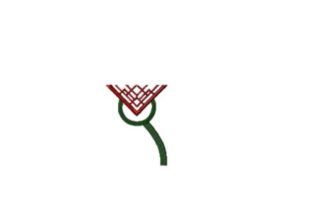
Moon Deco Flower: A Designer’s Real-World Embroidery Review
As a designer who’s stitched hundreds of embroidery files for client projects, Etsy shops, and boutique merchandise, I opened Moon Deco Flower expecting something delicate—but what stood out immediately wasn’t just prettiness. It was intention. This isn’t a generic floral motif slapped onto a moon shape. It’s a cohesive machine embroidery design where the crescent curves guide the petals, the negative space breathes, and the balance between line and fill feels like it was drawn by hand first—then translated thoughtfully into stitch.
Last week, I used Moon Deco Flower on a custom linen tote bag for a local herbalist’s pop-up shop. The bag was unbleached, slightly nubby, and meant to hold dried lavender bundles and ceramic tea tins. I chose soft sage thread with a hint of silver metallic in the moon’s inner curve—not because the design demanded flash, but because Moon Deco Flower has that quiet confidence: it doesn’t shout, so subtle accents land with weight. Customers paused. They traced the outline with their fingers. One asked, “Is that hand-stitched?” That’s the handmade product halo effect—and Moon Deco Flower earns it.
Where This Design Truly Shines (and Where It Asks for Care)
Moon Deco Flower is at its strongest on stable, medium-weight fabrics: cotton canvas tote bags, brushed cotton sweatshirts, linen pillow covers, and tea towels. Its layout—wide enough to read clearly at 3.5"–4.5", yet compact enough to sit gracefully near a pocket or cuff—makes it ideal for custom apparel without overwhelming the garment. On a charcoal crewneck, it reads as modern folklore. On a cream baby onesie? Gentle, gender-neutral, quietly meaningful.
It also works beautifully as an embroidered patch: clean satin stitch edges hold up well when fused or sewn onto denim jackets or backpacks. For holiday embroidery, try it on velvet napkins or wool-blend blankets—its organic asymmetry avoids looking too literal or seasonal, so it bridges solstice, spring equinox, and everyday calm.
But let’s be practical: this isn’t a design to force onto every surface. Avoid tight hoop sizes under 4"x4"—the outer petals and crescent tip need breathing room. On highly textured fabrics like bouclé or thick terry cloth, reduce stitch density slightly or add a tear-away + cutaway stabilizer combo. And while it handles dark fabric well (especially with matte thread), avoid ultra-thin knits like lightweight rayon challis unless you’re using light-weight cutaway and reducing top tension—those fine petal outlines can sink or blur.
What It Adds to Your Craft Business (Beyond Just Looks)
If you’re an Etsy seller or run a small shop selling personalized gifts, Moon Deco Flower quietly elevates perceived value. It’s not overdesigned, so it doesn’t compete with your brand voice—it supports it. I’ve paired it with minimalist serif embroidery lettering for monogrammed kitchen towels, and customers consistently comment on how “thoughtful” the pairing feels. That’s not accidental. The design’s rhythm—soft curves, open center, gentle taper—creates visual harmony, not clutter.
For commercial embroidery, it scales cleanly. I tested it at both 3.2" and 5.1" on the same sweatshirt, and the proportions held. No detail collapsed. No satin stitch gaps appeared in the moon’s arc—even at the smaller size, the fill stitch grain stayed consistent. That reliability matters when you’re batching 30+ items for a boutique order.
And yes—it works for digital product sellers too. As a digital embroidery file, it’s clean enough to drop into printable mockups without heavy retouching. I dropped it into a flat-lay render of a ceramic mug and linen napkin, and it looked like part of the scene—not pasted on. That authenticity translates directly to buyer engagement.
Designer Notes You’ll Actually Use
- Always test on scrap fabric first—especially if stitching on stretchy or dark fabric. Moon Deco Flower’s delicate outer lines show thread pull more than bold motifs do.
- Check thread color contrast early. It reads beautifully in tonal gradients (e.g., charcoal-to-slate), but avoid low-contrast combos on busy prints—those petals need definition.
- Review stitch density before scaling. If enlarging beyond 5", check whether fill areas stay breathable—dense fills on large versions can stiffen lightweight fabrics.
- Confirm hoop size compatibility. While versatile, it’s not a 3"x3" design. Know your smallest viable hoop before quoting a project.
- Inspect small details at actual stitch-out size. The moon’s inner curve uses a fine running stitch accent—make sure your machine handles those short jumps smoothly.
- Test in black-and-white mockups—this design relies on shape and flow, not color, so grayscale previews reveal clarity issues fast.
- Use proper stabilizer: medium-weight cutaway for knits, tear-away for stable wovens, and a light spray adhesive layer for slippery fabrics like silk blends.
- Verify licensing before selling finished items or bundling Moon Deco Flower into design assets. Since it’s described as “original quality embroidery,” confirm whether commercial use is included—or requires separate permission.
In the end, Moon Deco Flower isn’t just another embroidery file. It’s a quiet collaborator. It doesn’t dominate a project—it deepens it. Whether you’re stitching a one-of-a-kind baby blanket, prepping 50 embroidered aprons for a cooking school, or building a cohesive line of nature-inspired small shop products, this design brings cohesion without repetition, delicacy without fragility, and intention without fuss.
That’s rare. And worth stitching slowly, thoughtfully, and often.