Green Monster Racing
A Designer’s First Look: Playful, Punchy, and Built for Personality
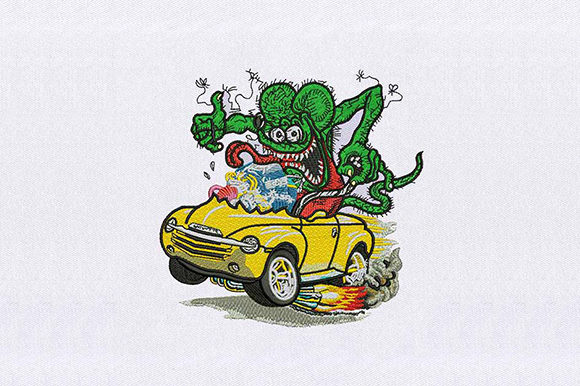
When Green Monster Racing popped up in my design queue—fresh from a client request for a boutique baby gift line—I paused. Not because it’s flashy or overdesigned, but because it *feels* intentional. It’s not just another cartoon monster; it’s got swagger, motion, and a cheeky grin that reads instantly at 4 inches wide. The shape is compact but dynamic—low vertical footprint, generous width—making it ideal for center-chest placement on toddler sweatshirts or the front panel of a structured tote bag. As a machine embroidery design, it leans into bold outlines and confident satin stitch zones, with subtle texture built into the “racing stripe” elements—not fussy, but enough to catch light and add dimension.
Where It Shines (and Where It Asks for Thought)
I tested Green Monster Racing across three real projects: a cotton twill apron for a local bakery’s staff gift set, a brushed polyester baby onesie, and a linen-cotton tea towel for a holiday craft fair. On the apron? Perfect. The design held crispness in the satin-stitched eyes and mouth, and the green thread popped against the natural fabric without bleeding. On the onesie? A success—but only with lightweight cutaway stabilizer and reduced top tension. The fine details (like the tiny checkered flag tucked behind the ear) stayed legible, but I’d hesitate to run it smaller than 3.5 inches on any stretchy baby knit without testing first.
The tea towel was the most revealing test. Linen’s open weave can swallow delicate running stitch accents, but Green Monster Racing avoids them—it relies on clean fill and satin work instead. That means fewer skipped stitches, better wash durability, and stronger visual impact after multiple cycles. For Etsy sellers listing handmade kitchen goods or small shop owners curating nursery decor, this matters: customers notice when embroidery holds up.
Smart Fit for Real Product Categories
- Custom apparel: Works beautifully on mid-weight sweatshirts and unstructured caps—its horizontal emphasis balances well on curved surfaces when hooped correctly.
- Personalized gifts: Pair it with a child’s name in a simple block font below—it reads as cohesive, not cluttered. Ideal for birthday totes, “Big Brother” onesies, or sibling matching sets.
- Embroidered patch: Clean outer edges and minimal underlay make it a strong candidate for iron-on or sew-on patches—just confirm your backing fabric won’t shadow through.
- Holiday embroidery: Swap thread colors to red/gold or navy/silver, and it transitions seamlessly to Christmas stockings or Easter egg hunt bags—no redesign needed.
Fabric & Function: What to Watch Before You Stitch
Green Monster Racing is forgiving—but not magic. On dark fabrics, the green needs high-contrast thread (think kelly or lime, not olive) to retain its energy. On thin cotton voile or rayon challis? Use tear-away + topping, and consider simplifying dense fill areas if your machine hesitates. And while it’s labeled for “any fabric,” I wouldn’t push it onto fleece-backed sweatshirts thicker than 12 oz without checking stitch density—dense satin zones can flatten and pucker if the underlay isn’t calibrated.
For commercial embroidery or digital embroidery file resale, verify licensing upfront. This isn’t just about legality—it’s about brand trust. If you’re an Etsy seller marketing Green Monster Racing-embellished products, buyers expect consistency and durability. A poorly stabilized run on a textured canvas tote will undermine perceived value faster than any description can repair.
Design Assets That Earn Their Place
What makes Green Monster Racing stand out among toys-themed embroidery isn’t novelty—it’s clarity of purpose. It doesn’t try to be everything. It’s not an applique design demanding fabric cuts and alignment. It’s not overloaded with micro-details that vanish at 2 inches. It’s a focused, scalable asset—ideal for printable mockups, quick-turn custom orders, or building a cohesive collection (think: “Racing Crew” trio with blue and orange variants).
For craft business owners bundling digital files, this design pairs well with simple border motifs or coordinating monograms—no competing visual weight. And for makers who sell finished embroidered patches or pillow covers, its balanced proportions mean less trimming waste and cleaner edge finishes.
Practical Notes Every Embroiderer Should Run Through
- Test on scrap fabric *first*—especially if using textured weaves, knits, or dark backgrounds.
- Check thread color contrast in both natural and artificial light; green shifts dramatically on charcoal vs. cream.
- Review stitch density visually—not just in software. Dense satin zones should flow, not feel heavy or stiff.
- Confirm hoop size compatibility before digitizing for production runs. Its width may require a 5x7 hoop minimum.
- Inspect small details (like the flag’s stripes or teeth) at actual stitch-out size—don’t rely solely on screen zoom.
- Try black-and-white mockups to assess silhouette strength—this design holds up well, but always verify.
- Use appropriate stabilizer: cutaway for knits, tear-away for stable wovens, and a light topping for napped fabrics.
- Double-check usage rights before selling finished items or reselling the embroidery file—commercial use isn’t assumed.
Final Thought: A Design That Sells Itself—If You Respect Its Rhythm
Green Monster Racing isn’t background noise. It’s a conversation starter on a baby blanket, a branding anchor on a boutique apron, and a joyful surprise on a holiday tea towel. It earns its place not by shouting, but by landing with confidence—clean lines, smart spacing, and a spirit that translates across age groups and product types. For designers, sellers, and makers who value intention over impulse, it’s a reliable, versatile, and quietly professional embroidery file—one that supports your craft business without demanding constant recalibration. Just give it the right fabric, the right stabilizer, and the attention it deserves—and it’ll deliver every time.