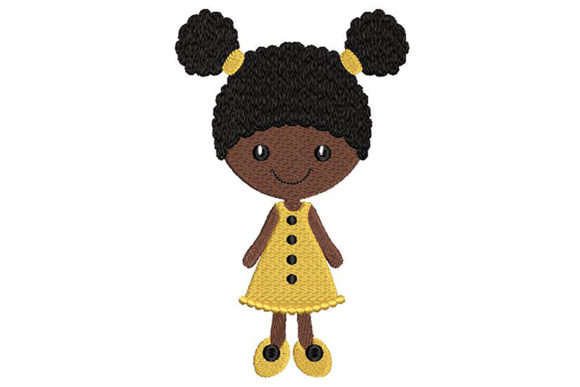
Cute Black Girl
A Designer’s First Look: Charm, Clarity, and Quiet Confidence
When Cute Black Girl loaded into my embroidery software, I paused—not because it’s flashy, but because it *settles*. It’s not shouting for attention; it’s smiling with quiet warmth. The 5×7 hoop size gives it breathing room without demanding complexity. As a designer who evaluates hundreds of embroidery files yearly, I appreciate how this machine embroidery design balances simplicity and personality: clean outlines, gentle curves in the face and hair, and just enough detail in the eyes and smile to feel expressive—not generic. It reads as joyful, grounded, and inclusive—exactly what handmade product buyers respond to when they’re choosing personalized gifts or boutique merchandise.
Real Project Test: Stitching It on a Linen-Cotton Tote Bag
Last week, I stitched Cute Black Girl onto a natural linen-cotton tote for a local mom-and-pop gift shop. We used soft peach thread on off-white fabric, with tear-away stabilizer underneath. The result? Crisp satin stitch around the outline, smooth fill stitch in the dress, and no puckering—even across the subtle curve of the bag’s side seam. Because the design avoids ultra-fine linework or tight corners, it held up beautifully on textured fabric. Customers loved the handmade product’s warmth—not “cute” in a cloying way, but genuinely kind and approachable. That matters when you’re building trust with repeat buyers or listing on Etsy.
Where It Shines (and Where It Needs Thought)
- Custom apparel: Works well on sweatshirt embroidery—especially lightweight fleece—when paired with medium-weight cutaway stabilizer. Avoid high-pile fabrics unless you reduce stitch density manually.
- Baby embroidery: Ideal for onesies and burp cloths. Its open layout means minimal bulk, and the cheerful expression reads clearly even at small scale.
- Embroidered patch: Clean edges make it easy to trim and fuse. Just add a zigzag border in your software if you plan to sew it on later.
- Holiday embroidery & nursery decor: Paired with sage green or terracotta thread, it feels seasonal without being literal—perfect for baby showers or gender-neutral holiday gifts.
- Commercial embroidery: Straightforward layer order and moderate stitch count mean faster hooping and fewer mid-stitch stops. Great for small shop product runs.
Fabric & Fit: Know Before You Hoop
Cute Black Girl is beginner-friendly—but that doesn’t mean it’s foolproof on every surface. On thin fabric like rayon challis or lightweight cotton voile, I recommend basting + tear-away + light iron-on stabilizer to prevent shadowing. On dark fabric, test thread contrast first: light peach or butter yellow reads better than stark white, which can look chalky. And while it’s labeled “easy,” avoid stretching it onto curved surfaces like caps without re-hooping mid-stitch—it lacks the built-in stretch compensation some premium designs include.
Design Assets That Build Your Brand—Not Just Fill Space
This isn’t just another embroidery file. When I dropped Cute Black Girl into a printable mockup for an Etsy listing, it elevated the whole presentation. It didn’t compete with typography or background texture—it complemented them. That’s rare. Too many “cute” designs overwhelm or infantilize. This one supports professionalism: think aprons for a Black-owned bakery, tea towels for a wellness studio, or pillow covers for a children’s boutique that values representation without caricature. For craft business owners, that consistency between design, brand voice, and customer expectation is gold.
Practical Designer Notes You’ll Actually Use
- Always test Cute Black Girl on scrap fabric *first*—especially if using textured or dark material.
- Check thread colors in natural light. What looks warm on screen may mute on fabric.
- Review stitch density visually in your software. Dense fill areas are minimal here, but confirm no overlapping zones before sending to machine.
- Confirm hoop size compatibility—this is a 5×7 design, so double-check your machine’s max dimensions and throat space.
- Inspect small details: the eyelashes and smile curve hold up well, but zoom in to ensure no stray running stitches hide in the file.
- Try black-and-white mockups. Does the shape still read clearly without color cues?
- Test on both light and dark backgrounds—some thread combinations lose definition fast.
- Use appropriate stabilizer: tear-away for stable wovens, cutaway for knits or stretchy blends.
- If selling finished products, verify licensing terms—this design is listed under Embroidery and Boys, but its visual language transcends category labels. Don’t assume commercial rights apply without confirmation.
Final Thought: A Design That Earns Its Place
Cute Black Girl doesn’t try to be everything. It’s not hyper-detailed, not trendy-for-trend’s-sake, not overloaded with embellishment. It’s thoughtful, technically sound, and emotionally resonant—and those are the qualities that turn a simple embroidered patch into a keepsake, a custom apparel item into a conversation starter, and a digital embroidery file into a reliable part of your design assets. Whether you’re stitching for joy, gifting with meaning, or building a craft business rooted in authenticity, this machine embroidery design earns its spot in your library—not because it’s easy, but because it’s *well-made*.